
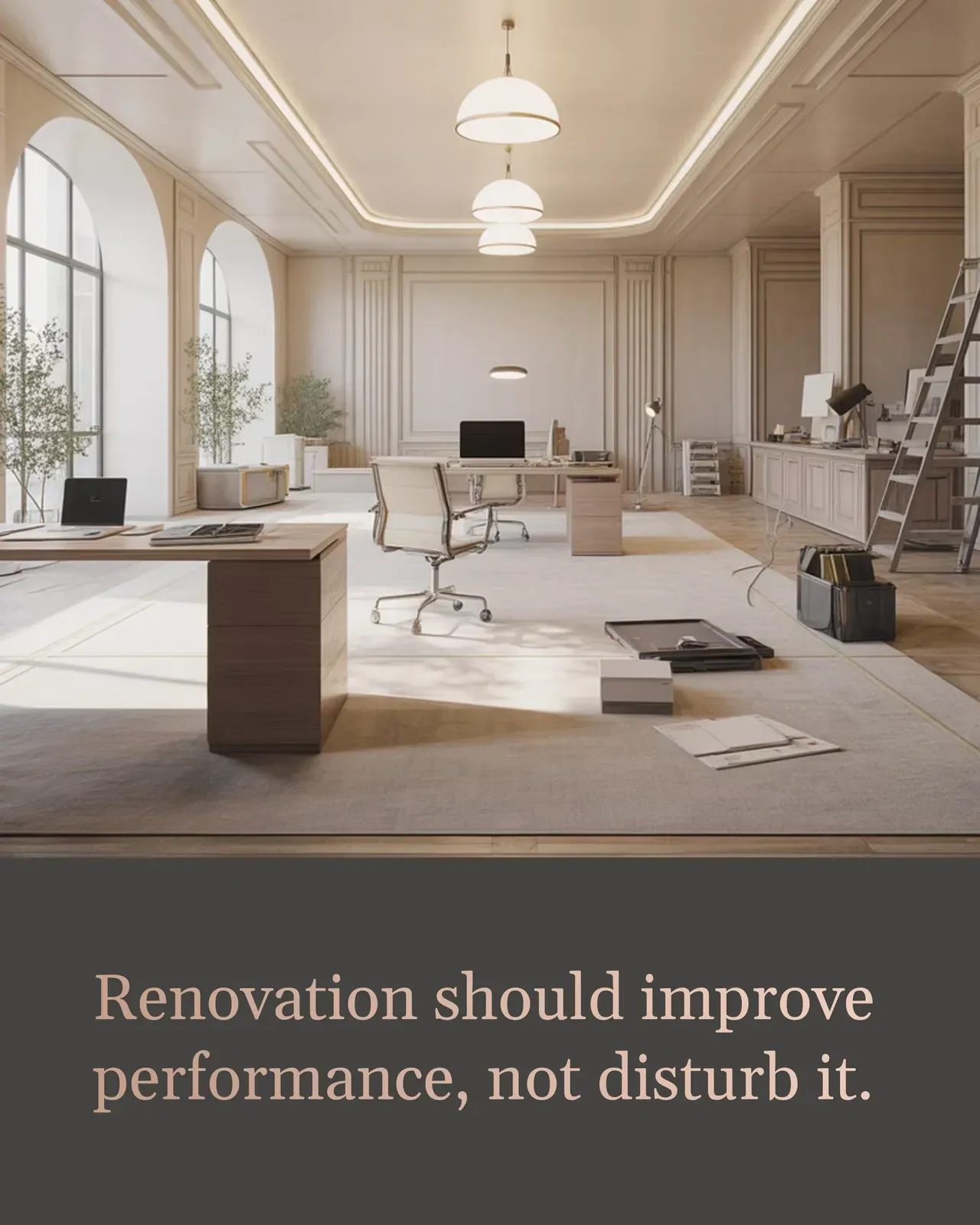
How Office Space Design Directly Impacts Employee Productivity
Explore the direct link between workspace design and staff performance. Learn how light, layout, and ergonomics can boost efficiency in your Delhi office.
Introduction
Employees don’t just work in a space.
They respond to it.
The right environment increases:
- Focus
- Collaboration
- Creativity
- Happiness
Poor design results in:
- Noise
- Chaos
- Distraction fatigue
We do not design spaces.
We design how people feel in those spaces.
✦ The Science Behind Productivity-Focused Workplace Design
1. Zoning: Separate Focus & Collaboration Spaces
Open offices were created for collaboration but ended up worsening focus.
A productive office has:
- Focus zones (quiet areas, personal work zones)
- Collaboration zones (discussion tables, soft seating, writable walls)
- Refresh zones (breakouts, informal chat areas)
When zones are defined, energy increases.
2. Ergonomics: The Foundation of Healthy Work
Ergonomics reduces fatigue and physical strain.
Checklist:
- Chair with lumbar support
- Adjustable monitor height
- Proper lighting angle
Good ergonomics = longer focus cycles.
3. Acoustics: The Silent Productivity Killer
Sound distracts more than visual movement.
Solutions:
- Acoustic panels
- Fabric partitions
- Sound masking systems
A quiet environment increases deep thinking time.
4. Biophilic Design: Nature Restores Focus
Biophilic design reduces stress and improves cognitive function.
Elements:
- Natural lighting
- Indoor plants
- Natural textures (wood, stone)
Humans perform better when connected to nature.
5. Technology Integration
Messy cables and missing power points waste time.
Plan tech before furniture.
✦ Conclusion
Productivity is not a result of employee motivation —
it is a result of how the environment influences behavior.
Design impacts output more than management instructions ever can.
✅Request Productivity Layout Audit
🔗 https://habitatdelhi.com/designproductivity
Still have questions? Contact our team